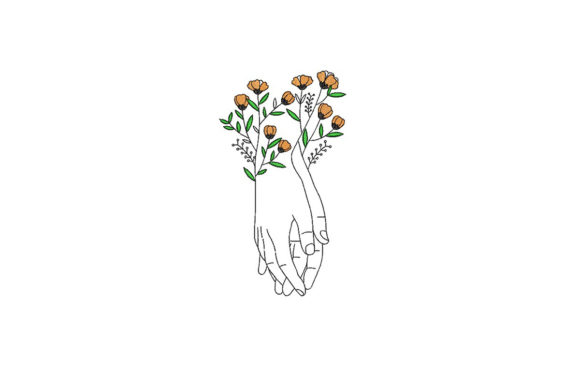
Hands with Flower: A Designer’s Honest Review
As an embroidery designer who spends countless hours digitizing and testing files for commercial use, I am always cautious about adding new assets to my library. We all know the frustration of downloading a digital embroidery file that looks beautiful in the preview but turns into a bird’s nest on the machine. Recently, I came across Hands with Flower on Creative Fabrica, and it caught my eye immediately. The concept is delicate yet powerful, fitting perfectly into the popular Outline Flowers category. After reviewing the details and considering its potential for real-world projects, I wanted to share my thoughts on whether this design is worth your time and money.
First Impressions and Visual Mood
The first thing that strikes you about Hands with Flower is its gentle, organic aesthetic. It captures a moment of care and connection, which resonates deeply with current trends in handmade goods. The design relies heavily on clean lines and thoughtful spacing, avoiding the overly dense stitching that can plague floral designs. This openness gives the embroidery a modern, airy feel rather than a heavy, traditional look.
From a technical standpoint, the visual mood suggests versatility. It is not overly masculine or feminine, making it suitable for a wide range of demographics. The interplay between the human element (the hands) and nature (the flower) creates a narrative that buyers love. For those of us selling on Etsy or at craft fairs, storytelling is half the battle. This design tells a story of growth, care, and beauty without saying a word.
Real-World Application for Custom Apparel
When I evaluate a new machine embroidery design, I immediately visualize it on various substrates. Hands with Flower shines in the realm of custom apparel. Imagine this stitched on the left chest of a high-quality cotton sweatshirt. The scale appears appropriate for a pocket placement or a central chest motif. Because the design likely utilizes a mix of running stitch for outlines and potentially light fill stitch or satin stitch for accents, it remains flexible enough to move with the fabric.
For sweatshirt embroidery, stability is key. If you are working with fleece or French terry, ensure you use a cut-away stabilizer to prevent puckering, especially if the design has any dense areas. The open nature of this design suggests it will sit well on textured fabrics without sinking in, provided your tension is dialed in correctly. It also translates beautifully to tote bags. A natural canvas tote bag design featuring this motif appeals to eco-conscious consumers who appreciate botanical art.
Considerations for Small Hoops and Caps
One of the challenges with detailed designs is adapting them to smaller surfaces. If you plan to use Hands with Flower for an embroidered patch or a cap, you must pay close attention to the hoop size requirements. Curved surfaces like baseball caps require careful hooping and often benefit from designs that are not too wide. If the design is too broad, it may distort on the curved front panel of a cap.
Before stitching on a final product, I always recommend running a test on scrap fabric similar to your final material. Check how the threads interact with the curve. If the design includes tiny details, ensure they do not become lost or tangled when scaled down. For caps, using a stiff stabilizer is non-negotiable to maintain the integrity of the stitch-out. If the design feels too large for a standard cap hoop, consider resizing it within your software, but be mindful that reducing size too much can cause stitch overlap issues.
Fabric Choices and Thread Colors
The product description notes that you can choose the color scheme at your discretion. This is a significant advantage. For a personalized gift, you might opt for monochromatic thread colors to create a subtle, tonal look on a linen apron or kitchen towel. Alternatively, high-contrast thread colors can make the design pop on dark fabrics. However, stitching on dark fabric requires careful planning. You may need to use an underlay or a lighter topstitch thread to ensure visibility, depending on the density of the design.
When working with stretchy fabrics, such as those used for baby items or athletic wear, the stitch density becomes critical. High-density designs can restrict stretch and cause discomfort. Since Hands with Flower appears to lean towards an outline style, it is likely safer for stretchy materials than a fully filled block design. Still, always test on a scrap piece first. Inspect the back of the embroidery after washing to ensure no pulling or distortion has occurred.
Commercial Viability and Brand Consistency
For small business owners and creative entrepreneurs, the ultimate question is: will this sell? Designs that evoke emotion tend to have higher perceived value. Hands with Flower fits seamlessly into niches like nursery decor, wedding gifts, and self-care products. It enhances the handmade product appeal by adding a touch of artistic sophistication.
Using consistent design assets helps build brand recognition. If your shop specializes in botanical or minimalist aesthetics, this design aligns well with that branding. It also works wonderfully for creating printable mockup images for your online store. A clean, well-digitized design photographs better, leading to higher click-through rates on platforms like Etsy or Shopify.
However, commercial success also depends on execution. Ensure you are following the licensing terms provided on the Creative Fabrica product page. While many designs allow for unlimited physical sales, it is crucial to confirm this before launching a new line of commercial embroidery products. Never assume; always verify.
Technical Tips for Best Results
To get the most out of this embroidery file, follow these practical steps:
- Check File Details: Before purchasing, confirm the available formats match your machine. Common formats include PES, DST, and JEF.
- Stabilizer Selection: Match your stabilizer to your fabric. Use tear-away for stable wovens and cut-away for knits or stretchy materials.
- Thread Quality: High-quality rayon or polyester threads will reduce breakage and enhance the sheen of the finished product.
- Test Stitch: Always stitch a sample on the actual fabric you intend to use. This allows you to adjust tension and speed if necessary.
- Inspect Details: After stitching, check for any loose threads or jumps that need trimming. A clean finish increases customer trust.
Final Verdict
Hands with Flower is a promising addition to any embroidery designer’s toolkit. Its versatility across different products, from pillow covers to aprons, makes it a valuable asset. The design’s balance of detail and openness allows for creative freedom in color selection and fabric choice. While it requires standard best practices in hooping and stabilizing, it does not present any obvious red flags that would deter professional use.
If you are looking to expand your collection of Outline Flowers or need a meaningful motif for your next seasonal collection, this design is worth considering. Just remember to respect the technical limitations of your machine and materials. With proper preparation, Hands with Flower can help you create stunning, high-quality items that resonate with your customers.